Bindas Bol! : Thursday June 26, 2008

"Where it is a duty to worship the sun it is pretty sure to be a crime to examine the laws of heat."
- John Morley

Prof. Jiban's Blog: Click here

Catch the Nimitt '08 fever at http://nimitt.wordpress.com/

Mail us at: prcom.pgdsm-mit@spjimr.org


Click HERE to return to the homepage

Bistrobanter Search Engine

Google Custom Search

Showing posts with label ColosSeuM. Show all posts

Saturday, October 27, 2007

Daandiya Raas @ SP!

Dandiya being the traditional Gujarati Folk dance, Dandiya Night, organized by CoLosSeuM and Cultcom was the most eagerly awaited event of the term. The event was a grand success with party-holic people, rocking music and prizes in different categories. Above all it was the 'dance' or rather 'daandiya raas' which had participation from one and all.

Not to forget the fashion meter at this do was quite high. Girls were spotted in Ghaghra Choli and Chanya Choli. The guys on the other hand were wearing Kurta Pyjamas and some in Pathani style.

The live band kept the pace of the evening high! It renderied popular Dandiya numbers which kept people glued to the dance floor till the end. Shilpa Kendre and Niloy Chandra of PGDM won the Mr and Ms Dandiya Night respectively. Ravindra Goel and Taru Gupta won the Mr and Ms Well- Dressed prizes. The best Dandiya group prize went to Aparna and group from PGDSM-MIT. Aditi Ma’am, Vanita Ma’am, Shailaja Ma’am and Lata Ma’am won the prizes for the best faculty group.

All in all, the event was a welcome break from regular classes and would linger on for a very long time to come :)

Cheers!

Vikas


Sunday, September 09, 2007

To sir, with love

September 5th, yet another day in yet another year, but the zeal and enthusiasm to thank the teachers comes up with a renewed vigour and straight from the heart. So it did at SPJIMR. It was 4 ‘o’ clock in the evening and all the participants were ready to give the teachers their greatest gift – show them their gratitude. The students of all the programmes were united in their efforts to come up with a plethora of programmes for the momentous evening.

The evening kicked off with a surprise quiz for the teachers, which was modelled in the same way as done while facilitating the learning of the participants. The results of the same were announced at the end of the programme. Of course this was to start the occasion on a lighter note.

The celebration started with the invocation of a prayer – “Tumhe ho matha, pitha tumhe ho….” by one of the student participants. The teachers were immediately presented with an innovative song – “Munna sikhaye, tumhe teacher ka funda…” by two other students, imitating Munna and Circuit of Munnabhai fame, the content of which included various managerial terms like Porter’s strategy in a hilarious fashion. It was followed by gazals and instrumentals performed by a few students, who kept the audience in rapt attention.

The innovations of the student participants knew no bounds. They came up with myriad entertaining shaayaris, the best ones being those made with the names of SPJIMR’s teachers. May be for the first time many people noticed that the names of the teachers really had wonderful meanings. One another student came up with a beautiful English poem exhibiting the importance of teachers in one’ life and the reverence the student community shared with them.

What’s teachers’ day if there is no place to showcase their talents? A small game was organised for the teachers that offered the student participants to witness the innovative and the lighter side of their gurus. It rained brilliant performances by the teachers – a few sang, a few came up with some activities as they were requested to do so and several others. With each performance they reiterated the fact that teaching keeps one young and all their performances matched the best of those hard practised performances given by the student participants.


All that begins well ends well. But the student- teacher occasion is here to stay forever. The programme ended on a touching note with a video made by participants of PGDSM-MIT. The message was stark - “A teacher affects eternity; he can never tell where his influence stops”. Clearly, the video stole the show with the hall resounding with a standing ovation.

The programme ended with a fitting prayer, dedicated to the teachers, delivered by all the student participants in the auditorium.

Guru Bramha Guru Vishnu Guru Devo Maheshwara
Guru Sakshaat Param Bramha Tasmai Shri Guruve Namah!

Cheers!
Ashwin

Thursday, August 30, 2007

India Calling! Independence Day Celebrations...

Ethereal beauty descended upon the campus and the students who were working their way off for the morning celebration. It’s a tranquil delight, serene sanctity, burning pride, upholding attachment, binding sense of duty and an overwhelming sense of belonging and togetherness.

Such is the spirit of the golden moment frozen in history for eternity. One could sense this spirit of India alive in the wee hours on 15th august, 07 buzzing through the SPJIMR campus. A plethora of impending exams, pending assignments and a flurry of Autumn placements did not discourage the students from working their way off till 7.00 A.M on the morning of 15th of August.

The campus was alight with a new ethnic aura. Girls clad in salwaar kameez flaunting their bangles and bindi every now and then, boys looking dapper in their sherwanis- it was perfect salute to the nation’s culture.

As the flag unfurled its glorious colors into the sky, and the college burst out with the bliss of the national anthem, a feeling of pride en gulfed every Indian standing there. The campus was abuzz with festivities. It was the first time all the students came together to celebrate the occasion on such a grand scale.

On a very touching note was the song “Aye mere watan ke logon” sung by a Saregamapa finalist and participant of PGDSM-MIT . The soothing voice and the aura of the frozen moment reminded each and every Indian of the sacrifice of the Indian army and price that was paid for the freedom we enjoy today.

The hall looked breezily adorned with flashes on green, white and orange with electric lamps now and then, all over the stage in the wonderful classical dance and a very innovative theme dance on "Vande mataram" performed by the PGDM students. Flying streamers of flag colours waving in unison with the dancers, the blue clad girl in the centre depicting the blue epitome of the ashok-chakra was a spectacular virtual display of the Indian flag.

The PGDM students also addressed intriguing social issues in a very thought-provoking skit. The play revolved around the story of a troubled freedom fighter who could re-kindle the forgotten dead spirits of materialistic countrymen and was indeed inspiring. The most popular pick was though, the performance of the song “Mile sur mera tumhara” by students, all hailing from different states, different languages. It was but a true amalgamation of cultures!

The message of unity in diversity was best displayed by the folk dance performed by the PGDSM-MIT students on various regional dances of India. Salve and soothing south Indian classical numbers along with the peppy garbha and stirring bhangra numbers set the crowd cheering. Indeed a tribute to our tradition of tolerance and peaceful co-existence!

And then a small game and video kept the audience on their feet. A short write-up on “ What does being Indian mean to you” kindled the patriot within everyone. A five minute video on “ What does freedom mean to you” shot across Mumbai in the various segments including slums of Andheri, Juhu and Infiniti mall reflected the true spirit amongst people. It ended on a an inspiring note wherein all the students of SPJIMR sang “ hum honge kamiyaab “ to symbolize India’s climb to the top.

“Sangharsh”- brought to fore the memories of the freedom struggle and the contribution of the young legendary Bhagat Singh, Sukhdev, Azad and Rajguru. The stirring lines “ Sarfaroshi ki tammanna ab hamare dil mein hai” rang in chorus throughout the hall. To see young and agitated; brave and selfless blood in action was a befitting message to all the students reminding them of their duty to the call of the nation. A very interesting debate between Mahatma Gandhi and Bhagat Singh was enacted to perfection symbolizing the importance of both forces in the freedom struggle.

The celebrations did not end there. The batch of PGDSM-MIT 03 was not to be left far behind. The PGDSM-MIT 04 classroom was alive with the shadow play video on the “True Freedom” being played. A classic combination of perfect lighting and shadows with the backdrop of flag colours gave the video a creative edge. Patrotic songs rang through the hall with students performing numbers from Swades and Lagaan.

The high point of the morning was the performance by Uma Narain madam who sang the number “Aye mere watan ke logon”. It was a heart-rending song. The dedication and passion with which it was delivered spoke every bit of the reverence she held for the nation. It was a very special moment for the students of PGDSM-MIT who were spell-bound with the exemplary performance. It was a wonderful example set for the students.

The excitement built up through the day with the screening of Swades as the Flick-Pic movie in the auditorium. The whole day was alive in elegant ceremony and every bit of it paid a tribute to the nation. We thank all the faculty members, Usha Madam, Varsha Parab Madam, the administrative department, the entire staff of SPJIMR and finally the participants who made this event a grand success!

Cheers,
Pratibha

Sunday, January 28, 2007

ColosSeum Newsletter

Republic Day Write Up: Villages

The one thing I would like to change about today’s India is the pitiful state (read socio-economic exclusion) of Indian villages.

‘Adopt a village’ – An implementable approach: There are 6.38 lakh villages in India (2001 Census). Companies, organizations small and big, high net worth individuals to start the drive. Any willing individual may also contribute. Apart from contributions via CSR, companies to also urge groups of employees to adopt villages. ‘Adopters’ to commit INR 25,000 a month per village for the next 10 years. Adopters to choose the village that’s near to their working environment and visit it once every half year for auditing and to provide guidance.

The focus areas need to be agriculture, financial inclusion, education (priority to education of women), setting up Self Help Groups, agro advisory groups and education advisory groups. The committed amount is to be spent on the functioning of advisory groups. The advisory groups will find and nurture village entrepreneurs who could collaborate with network orchestrators like ‘Drishtee’ and ‘eChoupal’. These entrepreneurs will bring ICT (Info and Communication Technology) kiosks to the village and thereby help bridge the digital divide.

These kiosks will bring agro advice, commodity prices, educational tools and banking services to the doorstep of every villager whose village is adopted. Also, the adopters can regularly connect with the village mandal leaders by means of these kiosks. With all the mothers in the village literate, in one generation, we could have a fully literate village. The agro advisory group will help monitor and tune the farming practices thereby increasing the yield of the produce. The Self Help Groups will gradually integrate with NGOs and banks. The adopters will share the responsibility of connecting the NGOs with the adopted village. The advisory groups will also encourage in getting a fair market for the small scale industry of the village.

The adopter, with help from his parent company will devise ‘Disaster Contingency Plan’ to take care of the village in times of earthquakes, flood or drought. The SHGs will inculcate saving habit in the villagers and will also urge villagers to pool money for a ‘Contingency Fund’. Such a fund will save thousands of villages (in terms of life, property) during the event of natural catastrophe.

NRIs who are keen to bring money into India for investment into sunrise businesses shall be mandated to adopt a village. They can nominate a person or an institution that will be in regular contact with the village mandal leaders.

This initiative involves Indians in India and the Indian diaspora resident abroad. Also, this model empowers the communities within the village. This gives our villages the confidence to shine from within. For the adopters, this is economic patriotism in the truest sense! A school or a marriage hall will be named after the adopter on 5th year of adoption. On completion of 10 years, the adopter (group or individual) could choose to continue for another term. The government can institute a medal of honor for this.

So, when are you adopting a village?

- Ganga

Republic Day Write Up: Education

Hope is a state of mind, not of the world. Hope, in this deep and powerful sense, is not the same as joy that things are going well, or willingness to invest in enterprises that are obviously heading for success, but rather an ability to work for something because it is good. -Vaclav Havel

There are ways of thinking and there are means of doing. This applies to everything that we wish to achieve but have shelved for lack of time or effort. What I believe we need to do is to educate one child at least and motivate that child to live, to create the truly wonderful thing that children are capable of creating in their lives; meaning. How often have we rolled our windows up in disdain at the shabby appearance of the boy selling flowers at the traffic signal or muttered something about pity or worse yet asked him, “Aye yeh sab kya karta hai, school jana chahiye!” Don’t even bother answering that. But give it a thought.

In other episodes, we may have very graciously given clothes our children have grown out of to the children we see walking around close to the building. We believe we have done our good deed for the day and in some way improved their lives. But how do these mindless acts of so-called charity contribute to their lives? DO you really believe that these children care how they’re dressed? Well maybe in a superficial sense they do but what they really want is to be acknowledged as a success story, not a statistic! They want to be known by their names, live in houses like you and I, have a family to live with. That’s what they really want and need.

So why can’t we with all our haloed existences provide this kind of environment to one child in India? All we’re talking about is some time and even lesser money. But a lot a will; will to not give up in the face of the child’s resistance to your efforts to make contact with him or her. Most children by this time in their lives have seen things more scary than people like us will see in a lifetime. They develop a natural mistrust of people and refuse to believe that good does indeed exist somewhere in the world and that not everyone has ulterior motives behind giving them an opportunity to do something.

The statistics with reference to destitute children in India belong to the Stone Age. While one may endeavor to do something positive for these children, one doesn’t even know the extent of this problem. Thankfully, child labor laws have been revised to extend childhood to the age of 18. But this has also been done in a fashion that has affected the children adversely as many of them were then listed by employers as illegal and hence paid much less. The environment in which Indian children live,learn and grow frustrates their attempts to have equal access to education. Initiatives like the Sarva Shiksha Abhiyan taken by the Government have not made much of a difference. The difference will not be seen overnight. But why should I not start by educating my maid’s child!

- Pradnya Surve

Republic Day Write Up: Health Care

One Thing I would like to change about India is to provide universal access “Health for All” irrespective of age, class, gender and race. Health reach is pathetic in our country. People die for want of simple operations like young children dying of appendicitis which is a simple curable disease, women suffering from excessive bleeding for want of simple uterus removal operation, old men suffering from hernia which is again a simple operative procedure.

Presently there is Inequitable Distribution of Healthcare services. They are not there which needs the most and even if they are there, it is out of reach of many. Even if a middle class person has to be hospitalized it shakes him because of the cost incurred. It is estimated that hospitalization is responsible for pushing 5-8% of people below poverty line every year. The need for today’s healthcare is reducing the cost so that it is available each and everyone in the country. We are still fighting with diseases like Tuberculosis, Kala Azar etc which are unheard of in many of the countries. Despite many Pulse Polio Programs we are still struggling with Polio.

And with this we are facing new “lifestyle disorder” like Diabetes, Hypertension and some deadly diseases like HIV/AIDS. India is second largest diabetic population in the world and with this rate it would surpass all the figures. Coming to the healthcare spend by the government. India spends just 0.9-1.2% of GDP on healthcare and if we compare the same with leading countries like U.S. (5-6%) U.K. (6.4%) it appears like tiny dwarf. Even if the primary healthcare centers are there, there is no doctor to treat patients. And more than that Health doesn’t mean just being free from any disease, it means attaining best of physical, mental, spiritual and social health. It should not be only the survival but to live the life to the fullest. So for India to really prosper (along with double digit growth rate) we really have to do something about the Healthcare model in India.

- Dr. Anshumaan Yadava

Republic Day Write Up: Cities

India today symbolizes a heterogeneous mix of the India that was 100 years back and the India that would be 100 years ahead in the future. This divide well portrayed by the “India Poised” campaign is one of the major hurdles towards India’s leap to a fully developed nation. This divide is a legacy of a system neglected for years and counteracted by the will of people who wanted to grow and make a mark in this world. With the western nations reaching saturation, India stands at the crossroads with a promise to lead the world on the back of its young working population and the intellectual capital generated over the years. The divide can be bridged only when the growth engines of India i.e cities have good living conditions and all the citizens get easy access to good medical facilities, desired education, well connected transport network, open spaces, clean environment and good housing and sanitation.

Thus my desire is to change the face of all the Indian cities from stinking, slum ridden and choked places to an open and clean environment so that divide between the prosperous areas and the slum pockets is automatically bridged. This will also ensure that growth and prosperity does not happen at the cost of basic values of human beings. The task to bring about this change will start with the reorganization of the municipal corporations of these cities. These municipal corporations would be converted to a corporate setup where both public and private parties have equal stake. The democratic approach will consist of industry professionals who will perform key decision making while representation from different parts of the city will be done by the existing municipal councilors. The revamped structure will actually break the slumlord-builder-politician nexus and bring down the parallel but shady economy of the city.

The corporate setup will ensure that proper developmental goals are set and channeling of funds happens in a fair and transparent manner. The next step will involve creation of accountability and information system for the civic services such as law and order, utilities, and the local government itself. The information system will enable availability of information to the people and root out corruption and procrastination on the part of bureaucrats. The future of these cities can only be sustained if they emerge as major economic hubs. Therefore, a parallel initiative would be to connect these cities by creating world class railway terminals, airports and business districts. The above initiatives can be sustained through a mass awareness campaign among the people about the proper use of civic amenities and awareness of equal rights over these places. The development of these cities would be incomplete without social development hence special schemes have to be launched uplift the urban outcasts. Today’s cities are also the centers of the most polluting industries. These centers need to be relocated and youth to be retrained for alternative income sources. This does not mean doling out subsidies but it means constructing clean and open parks and providing good civic amenities in the vicinity which will bring them on equal standing with the other members of the society. Imagine having 35 full developed and self contained cities in India and the whole migration to major metropolis will automatically be stopped. This will reduce the pressure on major cities and also make them attractive tourist and business destinations on the global map.

- Vishal Jain, PGDM 206

Wednesday, January 24, 2007

Republic Day Write-Up contest: Deadline 235959 today!

Doston,

The deadline is extended to 23:59:59 hrs tonite... Come on, put on your thinking hats! Send your entries to sports_cultcom.mit03@spjimr.ernet.in asap!!

Friday, September 29, 2006

Dholi taaro dhol baaje! Come bask in the colors of Dandiya!

Dandiya night at SPJIMR 27.09.06 19:00- 22:00 hrs

Beyond the colors and vibrancy of “Navratri” there exists a deeper meaning that signifies the dissipation of ignorance within the "self" using the lamp of knowledge. Sincere devotion yields strength to surmount obstacles with the aid of Durga Ma, bestows wealth to lead a prosperous life with the blessings of Sri Lakshmi and enriches knowledge to do away with ignorance with the help of Devi Saraswati.

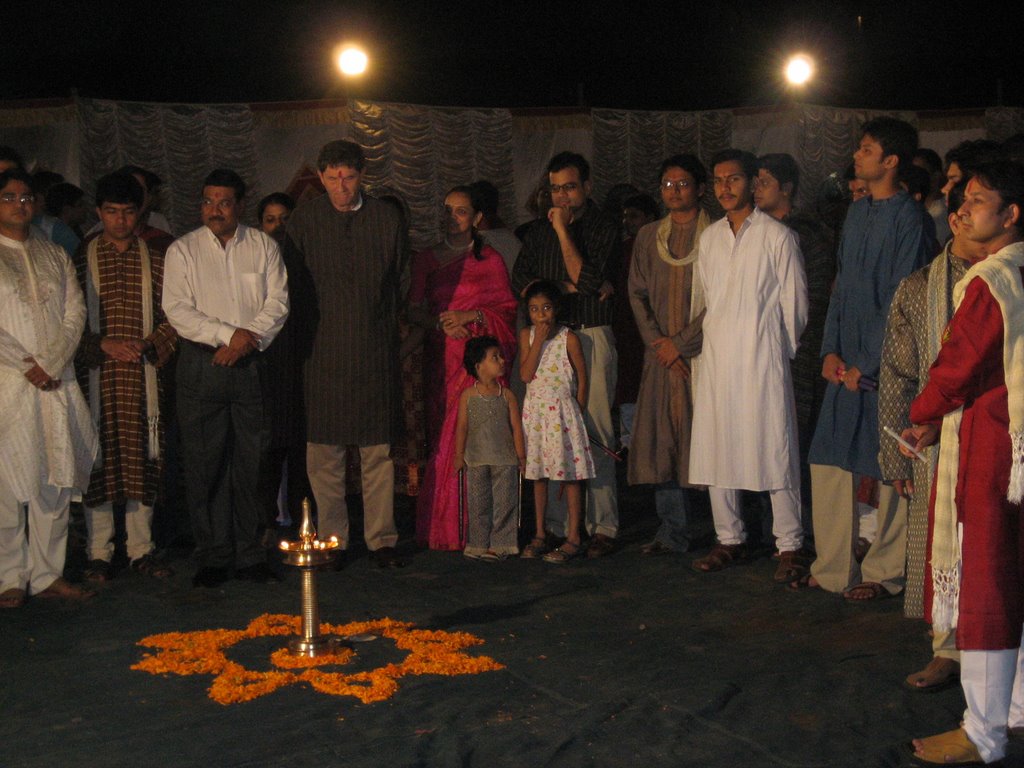
At SPJIMR, a new dimension was given to this colorful festival with the advent of “DANDIYA NITE”. Cultural and Sports committee of PGDSM MIT, the “ColosSeuM” embarked on a sparkling initiative of organizing a night exclusively at Bhavan’s cricket ground for dancing to the tunes of traditional Garba and Dandiya music. We also had Dr. Thomas T. Sheehan, Director of MIT-India Program of Virginia Tech, as a special guest gracing the occasion. The event started off with a traditional lighting of the diya by Dr.Sheehan and Prof.Sunil Rai, Joint Director of PGDSM MIT program of SPJIMR.
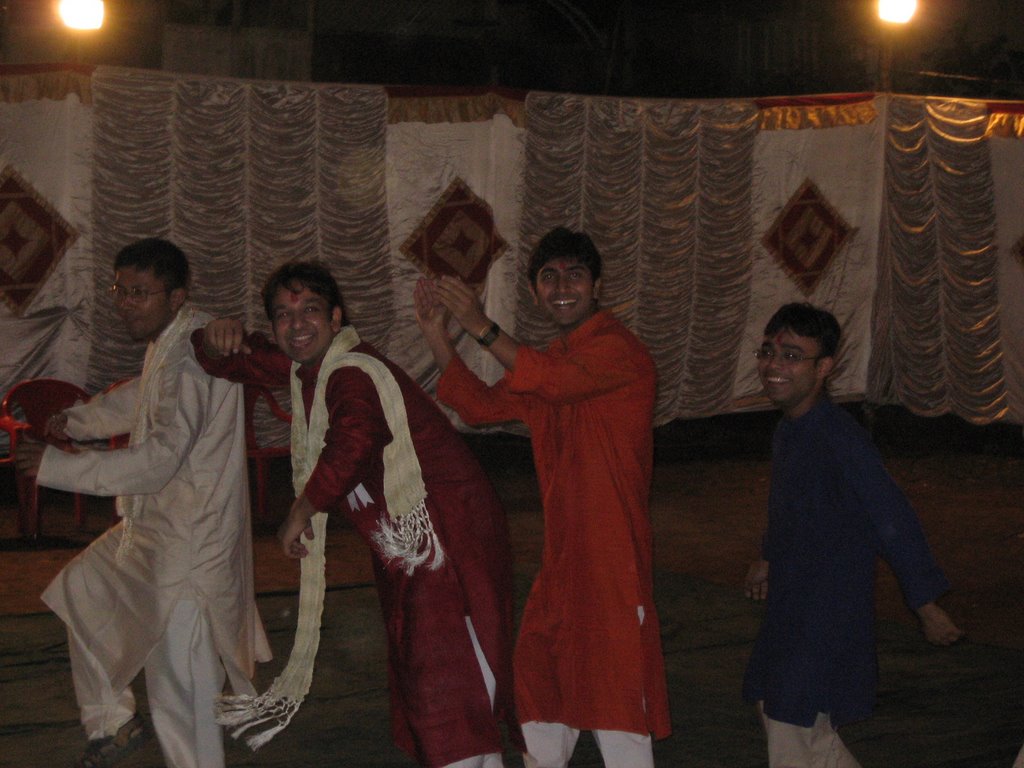
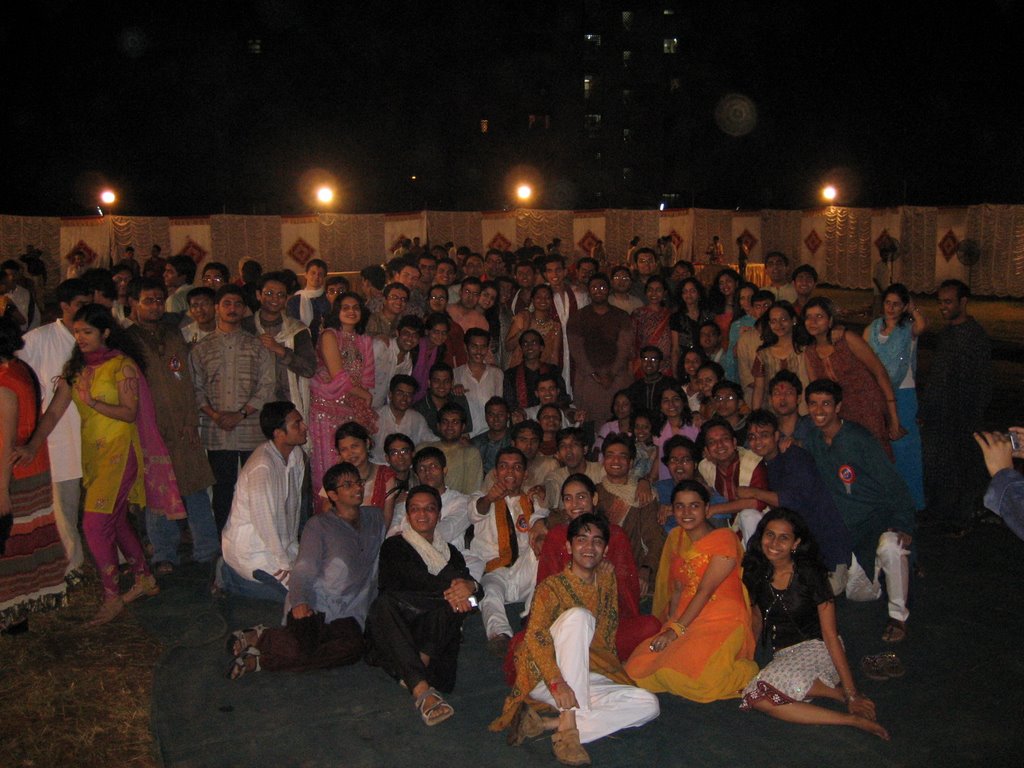
“Dandiya Nite” indeed served as a colosseum bringing the participants of various programs (PGDBM, PGDM and PGDSM MIT) together under the umbrella of fun, colors and spirit. The ladies were looking their best in ghagra cholis and the men were dapper in their kurta pyjamas adding to the spirit of tradition and culture amongst youngsters.The air was not only filled with foot tapping Dandiya numbers but also with the aroma of mouth watering food items. :-)


And this is not all. Outstanding outfits and graceful dancers were also recognized and awarded.The award for best Attire was given to Rachna Shah of PGDSM MIT02 under the category for girls. Punit (PGP-1) and Maulik (PGDSM MIT03) shared the awards for the same under the category for men. Gaurav (PGP-1) and Kirti (PGP-1) bagged the award for best dancers. As always, all good things come to an end. Yet this was not the culmination but the beginning of unity, togetherness and fun for the participants of SPJIMR.

Kudos to CoLosSeum for the wonderful effort and cheers to all SPJIMR participants for making the event a grand success.
Cheers!
Sukanya.
on behalf of PRCOM

Wednesday, September 27, 2006

Run up...to the Dandiya Nite

Hey Rakesh..Wassup with stalls yaar? Helloo..hello..haan Saurabh, kudhe aahes tu…Catering ka kya haal hain? Natasha, you got invitations printed? Amid the fun filled mayhem, Shireen is busy arranging for the orchestra…Adi K is busy shopping for the prizes…it strikes to him that he is yet to get the permissions in place. So, go meet the cop…vroom, first gear…chugh chugh..his pulsar is thirsty! While Parag da is busy with the list of invitees, Sonaal is giving finishing touches to a beauty of a poster. Subin shouts from his vaastu certified back bench…hey Arvind, oor ellam poster otti dhool kelappu! The whole class is happy in the busy ambience. Hundreds of IP messenger windows are running here to there and back…with the same enthu of relatives and friends that attend your marriage. Discussions about the creative fluency in the invitations (walla! baandini?) are abound. Thanks to Shireen and Natasha for that.

In the midst of this festive fervor, in comes the good news. A bigger budget has been approved! Class cheers for ColoSeuM …apna sports n cult Com...Tarun wipes the sweat on his brow in the classic SRK tradition. The smile on his face says it all. Great support from the admin and faculty…class brimming with enthu and voluntary support…sCULpTorS’ support in every aspect..pgp and pgdm friends lending helping hands..

So..get ready for the most colorful event on apna campus! See you all tomorrow evening at the Dandiya Nite!

Chalo, I need to get back to Sachin’s Radio…Aye zindagi gale lagale..Suresh Wadkar's number is manchow soup for the soul. Wotsay?

Cheers,
ganga

Monday, September 25, 2006

It's the time to dandia!!

Folks,
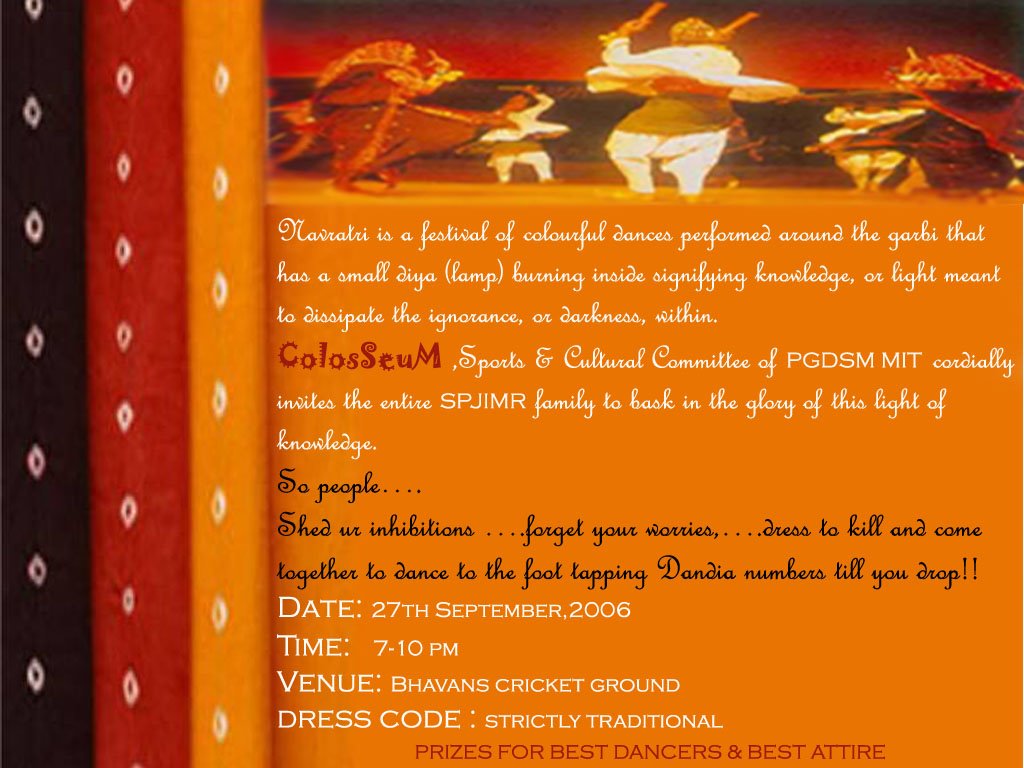
ColoSeuM...apna sports n cult com...is organizing a gala dandia nite on 27th september. We promise foot tapping dandia numbers till you drop! And more. So, mark your calendar. Come and be part of the most happening thing on our campus on 27th sep! Check out the lovely invite below.


GoStats stats counter