Dr. Lakshmi Mohan is a member of the Information Technology Management faculty of the School of Business, State University of New York. Before joining SUNY, she taught at the Sloan School of Management, M.I.T and the Indian Institute of Management, Calcutta.
At SUNY, her empirical research on decision support systems (DSS), executive information systems (EIS) and management of information technology has been supported by over US $ 2 million in grants from Fortune 100 firms and government agencies. Her current research interests are in Enterprise Systems including CRM, SCM and ERP systems, e-Commerce and e-Business, Data Warehousing and Data Mining.
She has also lectured and consulted worldwide including Argentina, China, India, Indonesia, Malaysia, Mexico, Singapore, South Africa and Switzerland. She has conducted several two-day Executive Programs on CRM in Kuala Lumpur (in Jan 2005), in Mumbai and Delhi (Feb, Aug 2004/05), in Shanghai and Mumbai (Feb 2003. She has also conducted in 2005 two programs on Business Intelligence in Kuala Lumpur and Mumbai and a specifically designed workshop on Human Capital Management in Mumbai.
She was invited by the Nanyang Business School, Nanyang Technological University, Singapore to teach the MBA course on CRM in July 2002 and has continued to teach that course every year since then. In March 2003, she was invited by the Graduate School of Business Administration, Zurich, to conduct a two-day workshop on e-Business for executives and deliver a public lecture on “Re-thinking the Net: Where is the value?” at the MBA Forum 2003. She received the Best MBA Workshop Award at the Zurich MBA Congress in October 2003, where she delivered a public lecture on “Management Imperatives to Make IT Business Smart”. She has also taught the course on Managing IT at GSBA in Apr, Aug 2004 and in Feb, Apr, Aug 2005.
Dr. Mohan’s clients include Colgate-Palmolive, Dannon, DuPont, GE, General Foods, PepsiCo and Pfizer in the U.S; the Dharmala Group (a large conglomerate in Indonesia), Edgars (the top retail store chain in South Africa), the multicampus affirmative action university in Malaysia (Institut Teknologi Mara), the Hotel Millenium Group in Monterrey, Mexico, the two leading banks in Singapore (DBS and United Overseas Bank), Singapore Airlines and Unilever.
In 1986, Dr. Mohan extended her consulting practice to India and has developed customized DSS and EIS systems for several companies including Bajaj Electricals, Britannia, DCM Shriram (sugar business), Glaxo, Hindustan Lever, ITC, UB and Voltas. She has also conducted in-house programmes for several firms including Colgate-Palmolive, Hindustan Lever, Marico, Reliance Textiles, UB and Singapore Airlines.
Dr. Mohan graduated from St. Xavier’s College, Bombay, with a first class first in Mathematics, and then obtained her Master’s degree in Statistics from the University of Bombay, again standing first class first in the entire University. Among the many prizes and scholarships that she received during her college education is the prestigious Chancellor’s Gold Medal of the University of Bombay for topping the list in the M.A exam with a record percentage of marks. She began her doctoral studies at the University of California, Berkeley, and received her PhD in Mathematical Statistics from Columbia University, where she was awarded the President’s Fellowship and a National Science Foundation Scholarship.
Cheers,
Ganga
Showing posts with label Guest Lectures. Show all posts
Showing posts with label Guest Lectures. Show all posts
Saturday, August 18, 2007


Guest Lecture by Mr Subinder Khurana: Company President marketRx
Mr. Subinder Khurana, Company President, marketRx, paid a visit to our campus to speak about the evolving face of the pharmaceutical industry. marketRx is a leading provider of specialized Sales and Marketing Effectiveness solutions to global pharmaceutical and biotechnology companies. marketRx today, is a "Best of the Breed" global organization headquartered in Bridgewater, New Jersey, with a strong presence in Europe and other countries across the globe.

 Mr. Khurana started the India operations for marketRx, and has helped it evolve into one of the largest third-party analytics solutions provider in India. Before joining the VC industry, he was the founder and CTO of EZPower Systems Inc., a Philadelphia-based software-products company. EZPower developed an award-winning suite of products for managing content of large web sites. He grew the business for 4 years and exit successfully when EZPower was acquired by DocuCorp International (NASDAQ: DOCC), a Safeguard Scientifics, Inc. company. Mr. Subinder Khurana has a B.Tech Degree in Electrical Engineering from IIT Delhi and an MBA (Finance) from Tulane University.
Mr. Khurana started by talking about the distinct features of the pharmaceutical industry. There was an absorbing discussion on whether the doctor or the patient is the customer of the industry. He elaborated on the exciting changes the industry is going through in the wake of the patent regime and globalization. He also mentioned the shift of marketing perspective from creativity to ROI. He stated that “Changes create opportunities” and that they should be grabbed.

Mr Khurana stressed on the need data driven marketing through high end analytics, data warehousing, modelling and analysis. He ended the session by pointing out that marketing analytics offers promising career opportunities and challenges for B-School graduates.
Tuesday, August 07, 2007
Management and Business Law!
That’s what the two sessions, back to back were centered around.. :)
The class of PGDSM-MIT 04 which had requested for these additional sessions from Prof. Pallavi Mody on ‘Legal aspects of a business’ was only too glad to have Prof. Damle enrich their knowledge in the same. Prof.D.M. Damle, a visiting faculty at SPJIMR, has been a practicing chartered accountant for over 3 decades now. That his knowledge of the various corporate laws that govern the country is vast was but established in the first 5 minutes of the session.
The session revolved around the various business laws, be it Financial, Marketing, HRD, Systems, Contracts and the like.
Law of limitation, S. 138 negotiable instruments/IPC, arbitration, collaborations, L/C, cyber laws, labour welfare laws and what not! Those and many more such complex terms were dealt with such precision and ease, that the class was thoroughly involved.
Filled with examples and sample cases from real life, the session was truly enjoyable. The case where the doctor had made a wrong judgement of not performing an operation or the one where entire families were wiped off by a criminal gang or the anticipatory breach of contract with a singer were relatable to. The LIFO logic being used in determining which among the twins is older will remain to be the most memorable of the lot. :)
The sessions concluded with a warm thank you to Prof. Damle for having taken the time out of his schedule and sharing his views with the class.
Cheers, Aparna
The class of PGDSM-MIT 04 which had requested for these additional sessions from Prof. Pallavi Mody on ‘Legal aspects of a business’ was only too glad to have Prof. Damle enrich their knowledge in the same. Prof.D.M. Damle, a visiting faculty at SPJIMR, has been a practicing chartered accountant for over 3 decades now. That his knowledge of the various corporate laws that govern the country is vast was but established in the first 5 minutes of the session.
The session revolved around the various business laws, be it Financial, Marketing, HRD, Systems, Contracts and the like.
Law of limitation, S. 138 negotiable instruments/IPC, arbitration, collaborations, L/C, cyber laws, labour welfare laws and what not! Those and many more such complex terms were dealt with such precision and ease, that the class was thoroughly involved.
Filled with examples and sample cases from real life, the session was truly enjoyable. The case where the doctor had made a wrong judgement of not performing an operation or the one where entire families were wiped off by a criminal gang or the anticipatory breach of contract with a singer were relatable to. The LIFO logic being used in determining which among the twins is older will remain to be the most memorable of the lot. :)
The sessions concluded with a warm thank you to Prof. Damle for having taken the time out of his schedule and sharing his views with the class.
Cheers, Aparna
Saturday, August 04, 2007
SAM-I-AM!! :)
As a part of the "Friday Leadership Series”, the Leadership committee invited Ms. Laura Parkin to share her experiences about ‘Leadership in Entrepreneurial Ventures’.
Beginning her lecture with verses which spoke of a certain stubborn and negative minded Sam, Ms. Parkin had the audience with her in the very first minute. Ms Parkin is the Executive Director of the Wadhwani Foundation, where she leads the foundation’s investments in non-profit programs. The overarching mission of the foundation is to create more economic opportunities for individuals in India. The foundation works in two areas: developing business entrepreneurs and helping the disabled build livelihoods or achieve gainful employment.
She is also the Executive Director and co-founder of the National Entrepreneurship Network (NEN), the foundation’s key program. NEN is a leading catalyst which launches next generation entrepreneurs in India. Since its inception in 2002, Laura and the NEN team have built NEN to include over 200 top tier institutes, including SPJIMR, across 26 cities. NEN is helping develop a pool of over 300 entrepreneurship faculty members, and reaches over 200,000 students.
Beginning her lecture with verses which spoke of a certain stubborn and negative minded Sam, Ms. Parkin had the audience with her in the very first minute. Ms Parkin is the Executive Director of the Wadhwani Foundation, where she leads the foundation’s investments in non-profit programs. The overarching mission of the foundation is to create more economic opportunities for individuals in India. The foundation works in two areas: developing business entrepreneurs and helping the disabled build livelihoods or achieve gainful employment.
She is also the Executive Director and co-founder of the National Entrepreneurship Network (NEN), the foundation’s key program. NEN is a leading catalyst which launches next generation entrepreneurs in India. Since its inception in 2002, Laura and the NEN team have built NEN to include over 200 top tier institutes, including SPJIMR, across 26 cities. NEN is helping develop a pool of over 300 entrepreneurship faculty members, and reaches over 200,000 students.

In her address Laura spoke about the characteristics of a good entrepreneur – excellent people skills, risk taking ability, optimism, creativity, negotiation, strong conviction and a clear vision. A keen ability to ‘think out of the box’ is also important. She said that a budding entrepreneur must know his customer segment well – their tastes, traits and abilities.
She then talked about NEN and described their various activities. NEN currently has plans of expanding into the international domain and is working on key catalyst programs that will help achieve this goal.
She concluded by quoting Prof. Howard Stevenson of the Harvard Business School - “Entrepreneurs pursue opportunities regardless of the resources they currently control”.
Reciting the ‘Sam-I-am’ lines along with the students, Ms. Parkin left the audi resounding with positive notes.
Cheers,
Manisha
Guest Lecture on Capital Markets: Mr. Jigar Shah
“Never before have so many unskilled twenty-four year olds made so much money in so little time as we did this decade (the 1980s) in New York and London.”Thus began Mr Jigar Shah, Director and head of research at ‘K.R. Choksey Shares & Securities’ in his address to the participants of the PGDSM MIT junior batch.
Mr Shah is a prominent personality and he has appeared on various television shows for CNBC, NDTV, Doordarshan on behalf of his organization to share his opinions on the capital market mainly in the equity segment. He is a pioneer in equity research and conducted various chat shows from time to time on Investment Strategy on various financial portals like www.myiris.com and http://www.moneycontrol.com/.
He started by speaking on the history of capital market. He spoke about works by prominent analysts like the ‘Theory of Speculation’ by Louis Bachelier, ‘Portfolio Selection and Diversification’ by Harry Markowitz and the ‘Brownian motion in the Stock market’ by MFM Osborne and how these theories apply to current capital market scenarios.
He shared his ideas on how one’s approach towards analysis of fundamental valuation should be. He explained his ideas on the argument of whether the study of capital markets is an art or science. He also spoke about the significance of the markets and its influence on the society as a whole. He concluded by suggesting some interesting reads like ‘Mega Trends’ by John Naisbit, ‘The alchemy of finance’ by George Soros and ‘Irrational Exuberance’ by Robert Shiller
Mr Shah is a prominent personality and he has appeared on various television shows for CNBC, NDTV, Doordarshan on behalf of his organization to share his opinions on the capital market mainly in the equity segment. He is a pioneer in equity research and conducted various chat shows from time to time on Investment Strategy on various financial portals like www.myiris.com and http://www.moneycontrol.com/.
He started by speaking on the history of capital market. He spoke about works by prominent analysts like the ‘Theory of Speculation’ by Louis Bachelier, ‘Portfolio Selection and Diversification’ by Harry Markowitz and the ‘Brownian motion in the Stock market’ by MFM Osborne and how these theories apply to current capital market scenarios.
He shared his ideas on how one’s approach towards analysis of fundamental valuation should be. He explained his ideas on the argument of whether the study of capital markets is an art or science. He also spoke about the significance of the markets and its influence on the society as a whole. He concluded by suggesting some interesting reads like ‘Mega Trends’ by John Naisbit, ‘The alchemy of finance’ by George Soros and ‘Irrational Exuberance’ by Robert Shiller
Monday, June 11, 2007
Guest Lecture: Dr. Sisodia
Dr. Sisodia, a Ph. D. in Marketing & Business Policy from Columbia University, is currently a Professor of Marketing at Bentley College. His research, teaching and consulting expertise spans the areas of marketing frameworks, marketing ethics, relationship marketing, measuring and improving marketing productivity, strategic uses of information technology, the marketing of services and marketing strategy.
Time: 3:00 - 5.00 pm
Venue: eMBA 1
Time: 3:00 - 5.00 pm
Venue: eMBA 1
Wednesday, May 09, 2007
Enterprise Applications - Prof. Prem Puri
- Collaborative platforms provided by - i2, Eqos, SAP, Syncra
- CPFR - Collaborative Planning, Forecasting and Replenishment
- Solution Maps
- Application Framework
- Tesco Case Study - primary distribution, free-gate price, wheely dollies, backhauling
- Walmart Case Study
- Hero Honda, TVS - collaboration in backhauling
- eProcurement - Ariba, first company to deploy
- Transporation - Sino European venture for railroad, inter-modal
- 3 PL - 3rd Party Logistics and Outsourcing
- Supply chain of Dell, IBM - owned by FedEx
Thursday, May 03, 2007
Guest Lecture on SCM - Mr. Kingshuk Hazra
Hearty welcome to Mr. Kingshuk Hazra, SAP India - Manager, Marketing Programs
Mr. Hazra is currently running the Campaigns, Lead Generation & Nurturing, Direct Marketing, & Online Marketing engines for SAP India. Prior to this, he was with the offshore arm of Oracle Consulting, helping setup & run their Marketing, Biz Dvlp Support & KPO teams.
He has 9 years of experience in IT Marketing & Business Development (with SAP & Oracle), IT
consulting & research (with Gartner),& Market Research (with IMRB). In his own words... he strives to combine thought-leadership ideas gained through his consulting & research days with hard nosed execution gained in his Marketing & BD days.
Specialties
Cheers,
PRCom
Mr. Hazra is currently running the Campaigns, Lead Generation & Nurturing, Direct Marketing, & Online Marketing engines for SAP India. Prior to this, he was with the offshore arm of Oracle Consulting, helping setup & run their Marketing, Biz Dvlp Support & KPO teams.
He has 9 years of experience in IT Marketing & Business Development (with SAP & Oracle), IT
consulting & research (with Gartner),& Market Research (with IMRB). In his own words... he strives to combine thought-leadership ideas gained through his consulting & research days with hard nosed execution gained in his Marketing & BD days.
Specialties
- Well Rounded Execution skills in Marketing - Campaigns, Direct & Online, Lead Generation & Nurturing, Analyst & Media Influencing, Advertising, & Events
- Ability to manage volume based selling, marketing, & pre-sales models
- Analysis & research - setup & manage research projects
- KPO Sales, Proof of Concept & Project Management
- Good understanding of ERP products & solution
- IT & Services Marketing
- IT Strategy
Cheers,
PRCom
Tuesday, May 01, 2007
Visiting Faculty, ERP/SCM - Prof. Prem Puri
PROFESSIONAL EXPERIENCE
Thirty Five years with International Business Machines Corporation (IBM) in the following major Responsibility areas.
Worldwide Director of Solutions for the Distribution sector
Distribution Sector covered three Industries .1. Consumer Products Goods Manufacturing, 2. Retail Industry and 3. Travel and Transportation (All modes)
Director of Transportation and Supply Chain management Industry (Europe Middle East &
Responsible for IBM’s business in Travel ,Transportation and Logistics Industry in Europe, Middle East and
Technical Support Manager in
European Responsibility for Technical Support to customers for HW, SW , Svcs and Education for a division of 14 European Countries.
Management Experience
Managed large groups of professionals and Managers across multiple countries cultures and time zones and with different technical skills.
Travel
Have lived and worked in
Speaker at International Conferences
Have been invited as a speaker at over 50 international conferences
Visiting professor at a number of Management Institutes in Asia , Europe and
Cheers,
PRCom
Friday, April 06, 2007
eCommerce - Guest Faculty Lecture Series
(6-8 April & 14-15 April)
Faculty: Dr. Dhrupad Mathur
Senior Consultant, Project Management Unit at the Ministry of IT, New Delhi, India
 Dr Mathur works as a senior consultant on the National eGovernance Plan at the Ministry of Communications and Information Technology, Government of India. With over 7 years of professional experience, he has been into academics as well as research.
He holds a PhD in e-Business process transformations for developing new business models. An MBA by training, he has international publications to his credit. Dhrupad is also a Sun certified programmer and an IBM Certified Solution Developer. He has worked with the United Nations Working Group on Internet Governance at
* Dr. Dhrupad's article
Courtesy : Pranav Bhatnagar, Acadcom
Cheers,
PRCom, PGDM (SM) MIT 03
Thursday, March 29, 2007
Guest Lecture by Mr.Dhimant Shah tomorrow @ 2.30pm
Dear all,
On Thursday, 29th March, Mr. Dhimant Shah, General Manager – Systems, CSC India will be coming over to our campus for a guest lecture.
His brief profile is as under:
- Worked with LTITL for 4.5 years before joining CSC
- Joined CSC as Project Leader 10 years back. Currently General Manager at CSC
- Over 14 years of industry experience across Manufacturing and Insurance verticals
- Heading insurance vertical for last 6 years. Life insurance, P&C insurance - across geography
Topic: Current trends in BFSI sector.
Date: 29th March 2007
Time: 2:30 pm to 5:00 pm
Venue: SM 2 (erstwhile FMB 2)
Cheers,
Ganga
Thursday, March 15, 2007
Guest Lecture Invitation:
Dear All,
On Thursday, 15th March, Mr. Shekhar Agrawal, Director and Business Head of Alcatel-Lucent will be coming over to our campus for a guest lecture. He has over 20 years of experience in IT and Telecom with current assignment being ‘Director and Head of Enterprise and Vertical business for
Topic: Opportunities and success factors in IT and Telecom sector for management grads.
Date: 15th March 2007
Time: 5:15 pm to 7:30 pm
Venue: DOME 2
Kindly register yourself for the session in advance by filling details at the following location.
\\dataserver\students\GuestLecture\Register_GuestLecture_ Mr.ShekarAgrawal.xls
NB: Participants of PGDSM MIT 03 need not register in the sheet.
Cheers,Ganga
Wednesday, February 21, 2007
Lecture: Joseph Stiglitz
Folks,
Topic: "Making Globalization Work" by Joseph Stiglitz
Link: \\mitserver\PGDSM MIT\Lecture
This lecture was delivered in Chennai on January 4, 2007.
Cheers,
Subin
Topic: "Making Globalization Work" by Joseph Stiglitz
Link: \\mitserver\PGDSM MIT\Lecture
This lecture was delivered in Chennai on January 4, 2007.
Cheers,
Subin
Friday, February 16, 2007
Prof. Lakshmi Mohan's lecture on Walmart
The Indo-American Society Management Development Forum had invited Prof Lakshmi Mohan to give a lecture on Walmart this evening at
Walmart- Its Growth and the Future
Some Facts
- Jack Welch benchmarked Walmart for the speed at which they performed.
- It is the World No 2 Company as far as size is concerned, the No 1 being Exxon Mobil.
- Failed in
- Sluggish growth in US market in the recent past
- They have the EDLP (Every Day Low Price) segment which they followed for years. But now they are rethinking on that front
- Best in inventory management and logistics – Sued Amazon for stealing their inventory management ideas
- Data warehouse is 2nd only to that of the
Growth
- Information Technology played a major role in the company’s growth- extensive use of the same in its business
- It has robust management processes
- Partnership with its suppliers and employees
- Obsessive focus on Costs – always thinking of cost cutting methodologies
- Absolutely Iron tight process is what they follow
History
- Started by Sam Walton in 1962. The first store was launched on that year
- It was located at Bentonville, which was a town at the backwater of
- 1970, it went public
Business Model
- Located stores in small towns
- Problem – No proper infrastructure or logistics
- Kept overhead low
- Moved into food retail in 2001 which is comparatively difficult to maintain
- Paid very less to their employees but made them the stakeholders of the company (“Golden Cuffs”)
- Knocked off the wholesaler in the distribution chain which saved the money which would have otherwise gone as commission
- Incorporated Just in Time approach where he incorporated IT extensively
- Strict about prices with suppliers
- Shared information with its suppliers
Key Features
- No class system or segmentation – all employees known as Associates
- 60% of their managers are those who have moved up the chain over years
- Empowering of front lines
- Keeps track of the competitor’s prices by visiting the competitor’s stores and buying goods from there
- Disdain for extravagance – corporate offices itself has a worn out look
- On outbound trips, CEO is supposed to share a room
- Culture of cost consciousness adhered to strictly
- Thinks one store at a time – strategy executed at the detail level
- The department store managers or the sales managers in the various stores knows the profit margin of each of the goods sold
- Keeps ears close to the ground – The company’s managers themselves go out in public and gather customer feedback instead of sitting in their corporate offices
- Follows Scan based Trading
- Reaction time very quick
- Incorporated IT to help in Absentee Ownership i.e. ability of the manager to control and monitor the store even in his/her absence
- Roped in a young CIO for the same
Failures –
- Entered
- Already many local low priced stores or shops were present
- Walmart wanted to provide customer delight by providing bagging and other facilities to the customers without hiking the price. But the customers were suspicious about the quality and nature of products which Walmart was selling
- Faced a culture difference
Changes taking place
- Detail rich HR database
- Hired a director of diversity
- In
- Segments customers into six major segments and designs stores accordingly
With this Prof Lakshmi concluded the lecture saying that Walmart might prove to be a baggage of surprise for India.
Cheers,
Sonia Kar - Bistrobanter, Marine Plaza
Sunday, February 11, 2007
Mr.Michael Nemeth visits SPJIMR

Mr. Michael Nemeth, VP - Insurance of CTS visited SPJIMR for a Guest Lecture on 7th Feb 2007.Mr.Nemeth has 27 years of experience in the Insurance industry with a diverse background in both 'Property and Casualty lines' of business and 'Life and Annuity lines' of business. He has extensive experience in consulting, outsourcing, business development and software package development, with a strong track record of building new business units.
Mr. Nemeth recently authored an article on ‘Overcoming Intuition: Flying lessons for Offshore Outsourcing Management’. In this article, he talks on ‘Beyond Management by intuition’.
On his visit to SPJIMR, he delivered a talk on the same. The following is the summary of his talk to the students.
Mr. Nemeth started the lecture by sharing his perspectives on IT revolution over the years. He said that the first phase marked a missionary zeal among the IT services organizations to convince clients about the proofs of concepts. They were getting the work that used to be done by independent vendors. They were typically harvesting the low hanging fruits in their domain of work. This first phase of IT revolution is over. Currently we are at the start of the second phase of IT revolution. The question in the minds of the clients these days is how to get strategic leverage out of the offerings from companies like CTS.
Second revolution is going to be counterintuitive, said Mr. Nemeth. Over the last 10 years the objective of outsourcing has been to save money. This is akin to dieting for the sake of reducing one’s grocery bill. A good outsourcing program achieves strategic objectives. Labor cost arbitrage is only a minor part of the contribution. Today the big ticket deals are in the area of rationalizing application portfolio for the client. We need to tell the client what applications can be pruned, upgraded and also advice them regarding the inclusion of strategic applications. Clients need partners to transform the business by applying technical and business skills. Billing rates only reflect our unit costs but the customer cost is known only after the project is completed. So billing rates are not costs, Performance is. No Cost Benefit Analysis can be done if the business value of the IT solutions is not known upfront. We need to increase the performance and there need not be a decrease in billing rates.
We are moving from what are currently pure services offering to a mixed services offering. The services are offered as a continuum. CRISP is an initiative where multiple companies come together to solve major problems in the Insurance industry. As regards the regulatory barriers, IT services firms face licensing requirements problems in only couple of states in the
An article was published in Coolavenues.com covering his visit and his speech.
http://www.coolavenues.com/bschools/news.php3
http://www.coolavenues.com/bschools/070212/spjimr-michael-1.php
The news is also linked from the Home Page of the site. You can also check Google News for listing of the same: -
http://news.google.com/news?&q=site:coolavenues.com&hl=en&scoring=d
Sukanya
Saturday, January 27, 2007
A visit to Bombay House

Mr R.Gopalkrishnan talked about globalization and how it is impacting businesses in today's world. According to him, there are three most important things for a sustainable business -
1. Intellectual Property
2. Economic VAlue
3. Context
So, business is a way of constantly creating new context. That is to create a market where your products can be welcomed even in long term. He also gave beautiful examples of how some of the big FMCGs sustained their business over a period by creating a right product and evaluating the right context.
This is the era of consolidation. Various businesses which moved far ahead and created various products with the advance of technology found it difficult to sustain in the market because they lost the context which they thought would exist for ever. But context kept on changing. Acquisitions and mergers are happening now a days to expand business in a global arena. So, the entire global has become the context.
According to Mr Gopalkrishnan, there are two modes of acquistions:
1. Prescriptive - where a company is forced to change its existence and behave according the the owner/major share holder
2. Adaptive - where the acquired company finds its own space and settles down. Coke-Thumbs up example beautifully explains this.
While a balanced approach to both the strategies above is a good solution, various factors like demography, geography, culture and core values play substantial role in choosing which one to adopt for the M & A strategy. Finally, according to him, businesses grows because of people's chemistry.
Cheers,
Manas Nimitt Sahu
Monday, December 04, 2006
Meryll Lynch ko supercomp kyu mangta?
 May be 'coz lot of their money is riding on the commodities market...and supercomps do a good job of climatic predictions and cluster analysis. You get the drift..
On 2nd December, Dr. Srinidhi Varadarajan shared with us his experiences in building the world's third fastest supercomputer, System X. Dr. Srinidhi is the Director, Centre for High-End Computing Systems (CHECS), Professor of Computer Science, Virginia Tech, USA
and CTO and Co-Founder of Evergrid Inc.
In this talk, Dr. Varadarajan gave us an insight about the entry barriers, production and marketing challenges faced while bringing to market a product (supercomp) whose life cycle is just 4-5 years and of which 5 units will be made. He also presented the motivation for System X, its architecture and upgrades, user experiences, the challenges faced in building, deploying and maintaining a large-scale supercomputer, and his thoughts about trends in supercomputers and high performance computing.
Dr. Srinidhi Varadarajan, at the age of 31, was credited with building the world's third fastest supercomputer, from the ground up. His path breaking approach has given a new direction to the world of supercomputers and high performance computing.
System X was conceived in March 2003 and had achieved a sustained performance of 10.28 Teraflops, making it the third fastest supercomputer in the world at that time. Unlike other supercomputers, System X was built out of 1100 ordinary Apple Macintosh desktop computers wired together. This revolutionary approach made it possible to build supercomputers at a fraction of the prevailing cost.
Biography:
Dr. Srinidhi Varadarajan received his Ph.D. in Computer Science from the State University of New York, Stony Brook in 2000. He presently serves as the Director of the Centre for High-End Computing Systems at Virginia Tech and as an Associate Professor in the Department of Computer Science. Dr. Varadarajan is the recipient of the ComputerWorld Honors Award in the Science Category 2004, a CAREER award from the National Science Foundation, the Egg Factory Technology Innovation award and a Faculty Fellow award from the College of Engineering, Virginia Tech. He was also honored by the MIT Technology Review in 2004 as one of the top 100 young innovators transforming technology. He is listed by HPCWire as one of the top 15 researchers worldwide in the area of supercomputing.
Dr. Varadarajan hails from Ahmedabad, where he did his schooling at St. Xaviers' Mirzapur. He then went on to receive his B.Tech in Computer Science at REC Warangal. He worked as a research assistant at IIM Ahmedabad with Prof. B. H. Jajoo during his school and college days.
Cheers,
Ganga
Thursday, November 16, 2006
Workshop on APICS Certification

Guest Lecture by: Mr.
On 30th September we had arranged a guest lecture by Mr. Pradeep Khetan, head of APICS Indian Chapter. He discussed and clarified the concepts of SCM and Operation Management.
Objective of the workshop was to discuss -
- What is APICS?
- What is Operations Management?
- CPIM Certification
- What is SCM?
- CSCP Certification
- CPIM/CSCP must for ERP/SCM/Operations Management career
- APICS-Consulting/Manufacturing firmsFuture of Operations Management/SCM
- Mr Vivek Marla, CPIM, Senior Director, Oracle India Pvt Ltd
- Ms Mythily Ramesh, CPIM, VP & Business Head, Wipro Ltd
- Mr Satish Kumar Das, CPIM, Chief Security Officer, CTS (I) Ltd
- Ms Shalini Sinha, CPIM, Asst VP, Genpact
- Mr Sriram K Moorthy, CPIM, VP, Supply Chain Services, Genpact
- Mr Sameer Khetarpal, CPIM, Asst VP-Operations, Genpact
- Basics of Supply Chain Management
- Master Planning of Resources
- Detailed Scheduling and Planning
- Execution and Control of OperationsStrategic Management of Resources
2006 Exam Dates for CPIM are:
Exam date Form filling deadline
- March 11, 2006 January 15/ January 22, 2006
- June 17, 2006 April 22 / April 29, 2006
- September 23, 2006 July 29 / August 05, 2006
- December 02, 2006 October 07 / October 14, 2006
He also discussed about Certified Supply Chain Professional exam. A CSCP certified professional is supposed to have in depth knowledge in four domains:
- Supply Chain Management Fundamentals
- Building Competitive Operations Planning and Logistics
- Managing Customer and Supplier Relationships
- Using Information Technology to Enable Supply Chain Management
It was a very informative session and helped the participants of PGDSM MIT to get initiated about SCM. Also, helped us understand how SCM facilitates the processes in organizations.
Cheers,
Amit Kumar
Thursday, October 26, 2006
VP & Financial Controller of M&M Group of Companies Visits SP Jain
Mumbai, October 10, 2006:
Public Relations Committee of PGDSM MIT 03 of SP Jain organized a guest lecture with Mr. Venkatraman S., V.P and Financial Controller of Mahindra & Mahindra Group of Companies on 10th October 2006.
Mr. Venkatraman, apart from being the Controller of Accounts of M& M Group, which comprises of about 75 companies, is also a member of the Working Committee appointed by the Institute of Chartered Accountants of India for revising Accounting Standard 9 on "Revenue Recognition".
Mr. Venkatraman addressed us on the topic "Current Management Practices in Industry" in general adding with it the dimensions of his 33 years of Industrial expertise. Mr. Venkatraman also shared with us his industry experience while he turned back and flipped past his industry life as a Financial Controller.
He was able to capture the attention of the audience in an eminent way by sharing his learning from his real life incidents. He was able to bring a clear idea of how it would be different for a manager in real life to manage between routines and challenges than what the life looks like from the eyes of a student. "Professionally right and personally nice" - a mantra he taught us all in his couple of hours long talk.
He shared with us the lessons he had gathered over 3 decades of professional experience. In all ways, it was an opening to the student community about the real life scenario once they step into the corporate world. The participants took much value from his lecture not only in terms of business management but also from the aspect of human values and people management.
The event coverage was also published in coolavenues.com and can be checked in the following links
Wednesday, September 27, 2006
Guest lecture by Dr. Marc Ghisi
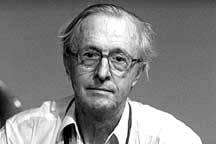
He has a remarkable ability to rearrange alphabets into words that touch the senses..
His speech was packed with enlightening statistics, extra ordinary anecdotal evidence and was undogmatically alive. He took us on a journey to the centre of the transmodern planet. He reached his core premise – the new uneasy struggle between the industrial modern society and knowledge transmodern society. Part sociological thesis, part guidance for future, his speech was engrossing and emphatic. Transmodern state is about non-violent negotiation. On this count, EU is a success, he declared.
“Business has a mission in bringing about change. Profit is just a consequence”, he observed. He pointed out that business education is about two legs. The first leg is where the traditional topics are learnt…finance, accounting, marketing et al. This is about the win-lose world. The second leg is where the soft skills are learnt. This is the win-win world. Both are important. Today’s tools of production are knowledge based. So, in a knowledge economy industrial management and mindset won’t work. He warned us about a serious global problem..that of collective death in spite of money and technology.
In the pre-modern world, the cosmos was sacred. In the modern world, the cosmos is relegated to being just an object. We need to take a leap into the transmodern world where men and women are part of the cosmos…where people bring about positive changes to sustain and nurture life. Dr. Ghisi explained how the animosity between
For all of us, this talk was a vivid handshake with one of the best minds from the EU.
To have a further look on Dr. Marc’s publications and interests do visit: http://www.vision2020.be/
Subscribe to:
Posts (Atom)
